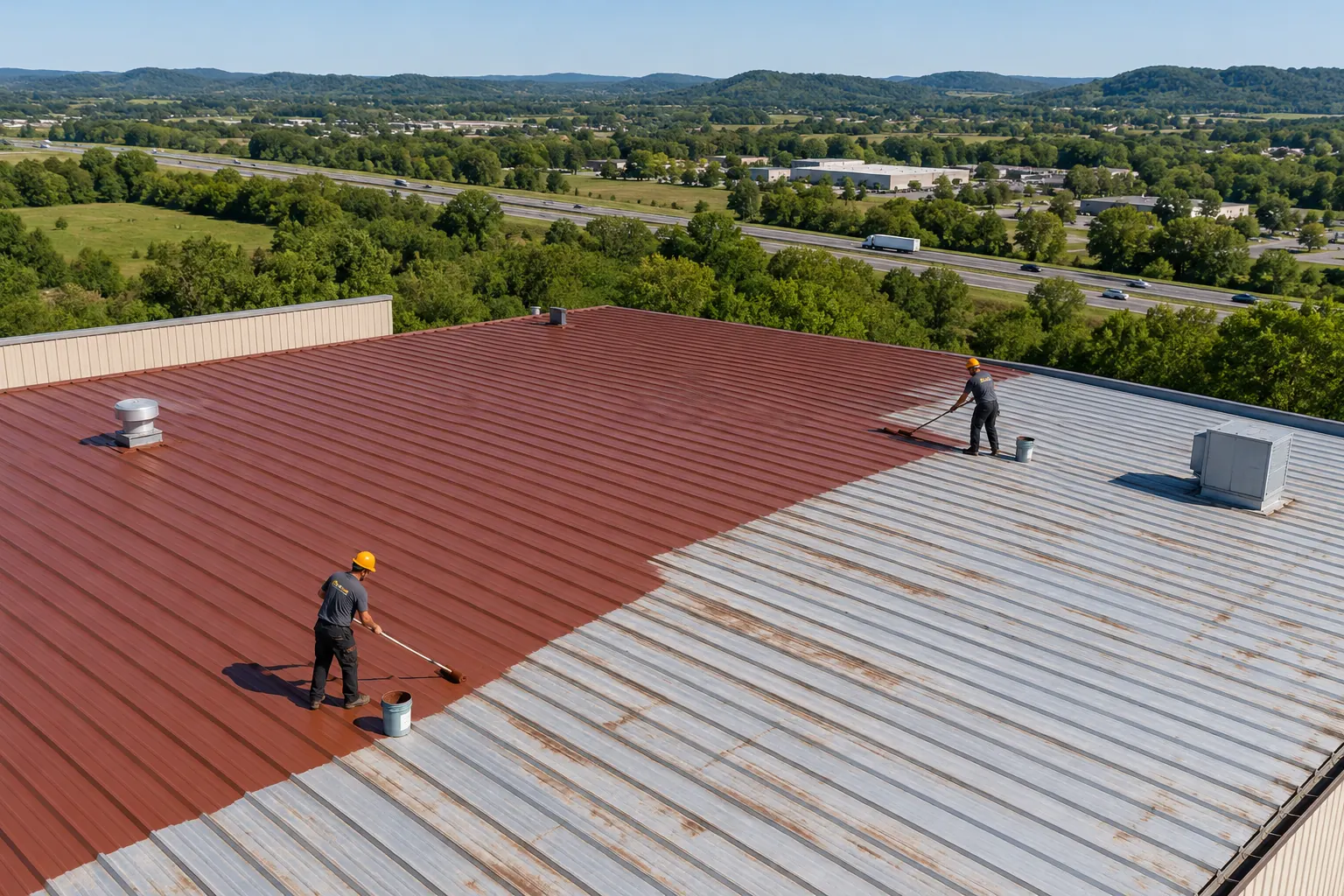
Metal Roof Coating
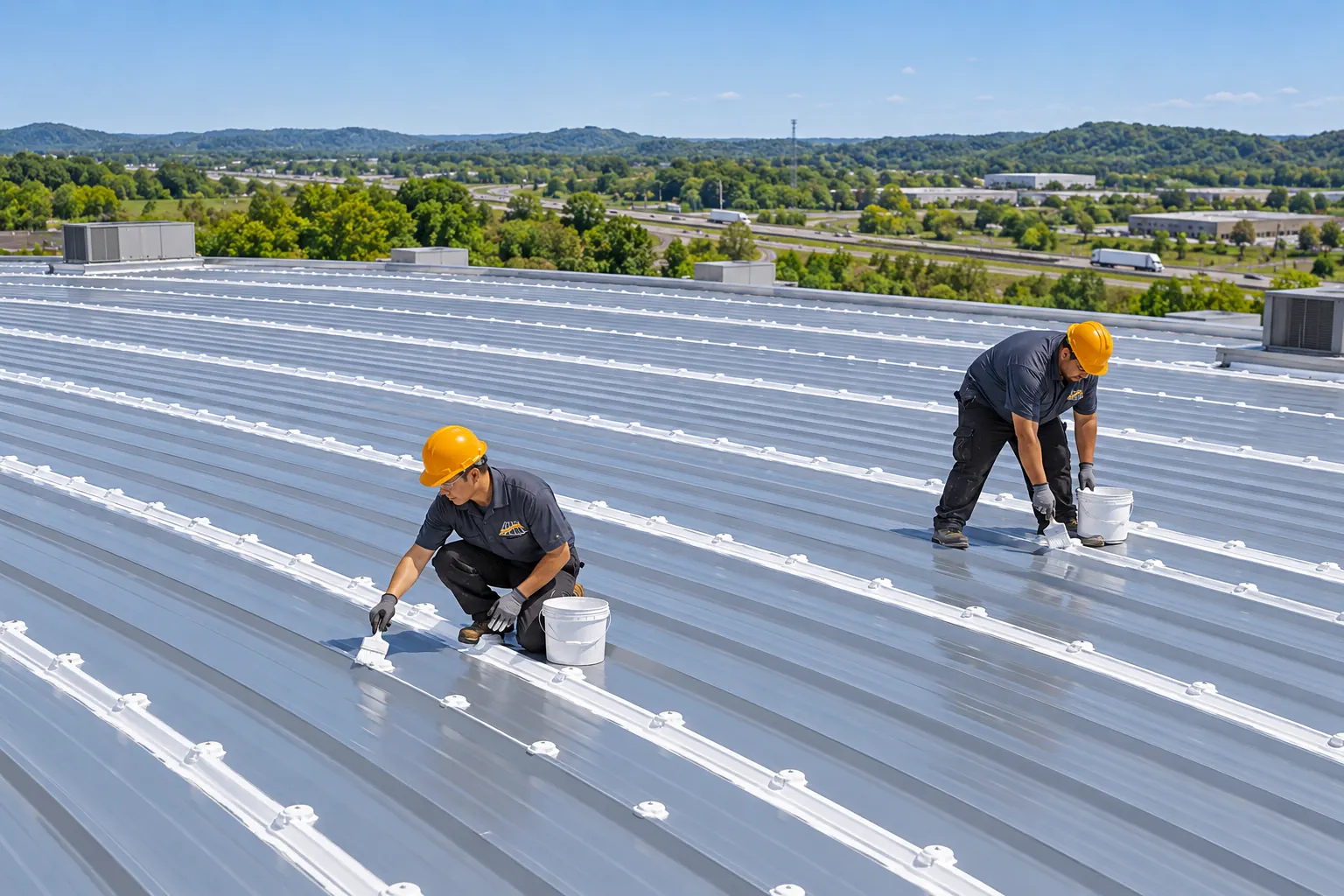
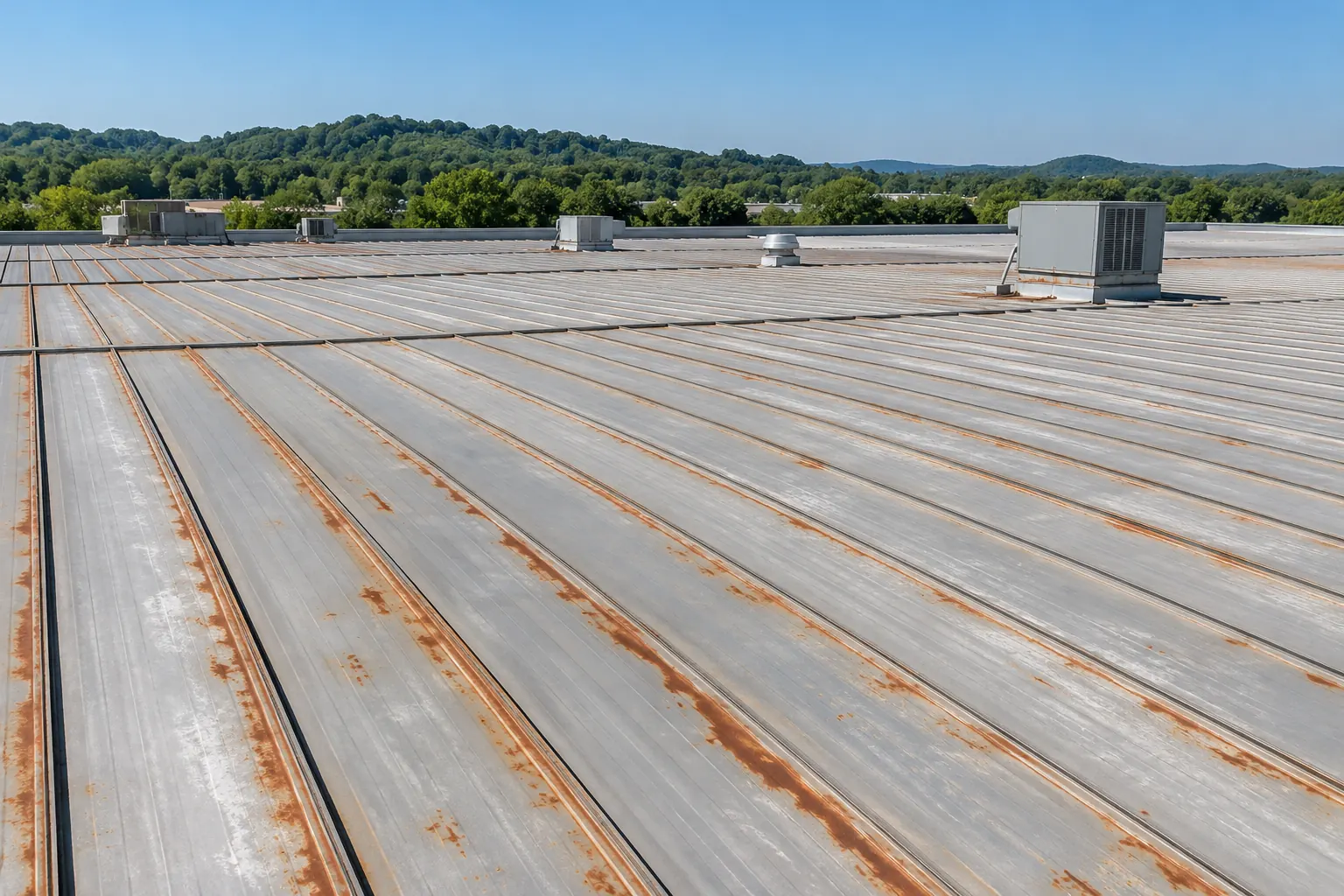
R-panel, PBR, and standing seam roofs with rust at the laps and leaking screws. Loose rust comes off, bare steel gets primer, and every fastener head is sealed before the base and top coats.
Metal roof coating detailsCommercial Metal Roofs · Bowling Green, KY
We coat commercial metal roofs in Bowling Green, Warren County, and nearby towns. The work starts with a roof walk, then every screw, lap, and seam gets sealed before the coating goes on.
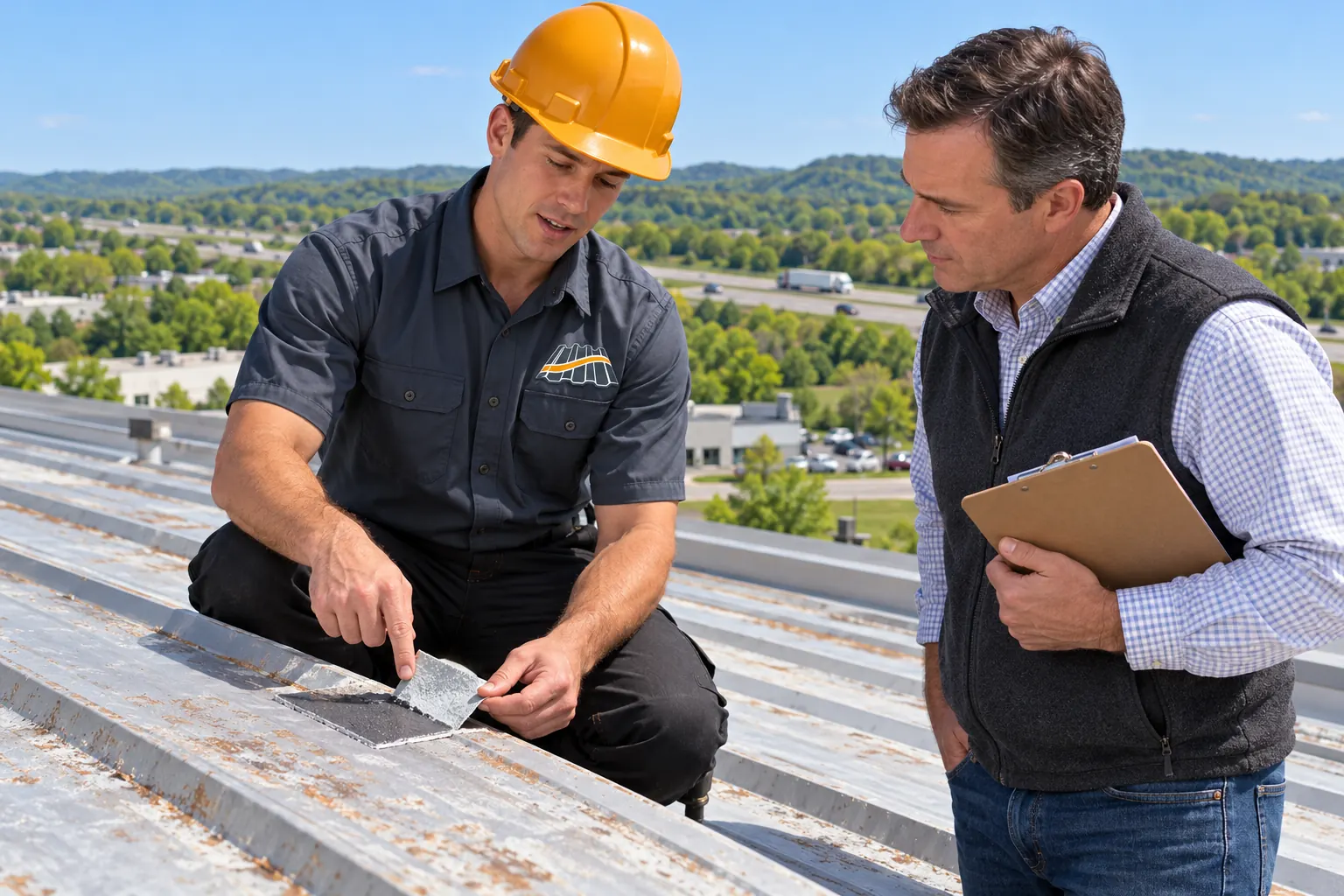
1Inspect The Roof
2Seal And CoatFive Coating Systems
Each card shows the roof parts that system works on. Pick the one closest to your building, then read the details.

R-panel, PBR, and standing seam roofs with rust at the laps and leaking screws. Loose rust comes off, bare steel gets primer, and every fastener head is sealed before the base and top coats.
Metal roof coating detailsLow-pitch panels where rain lingers along gutters, behind curbs, and above skylight panels. Silicone holds up under standing water, and later recoats must be silicone too.
Silicone coating details
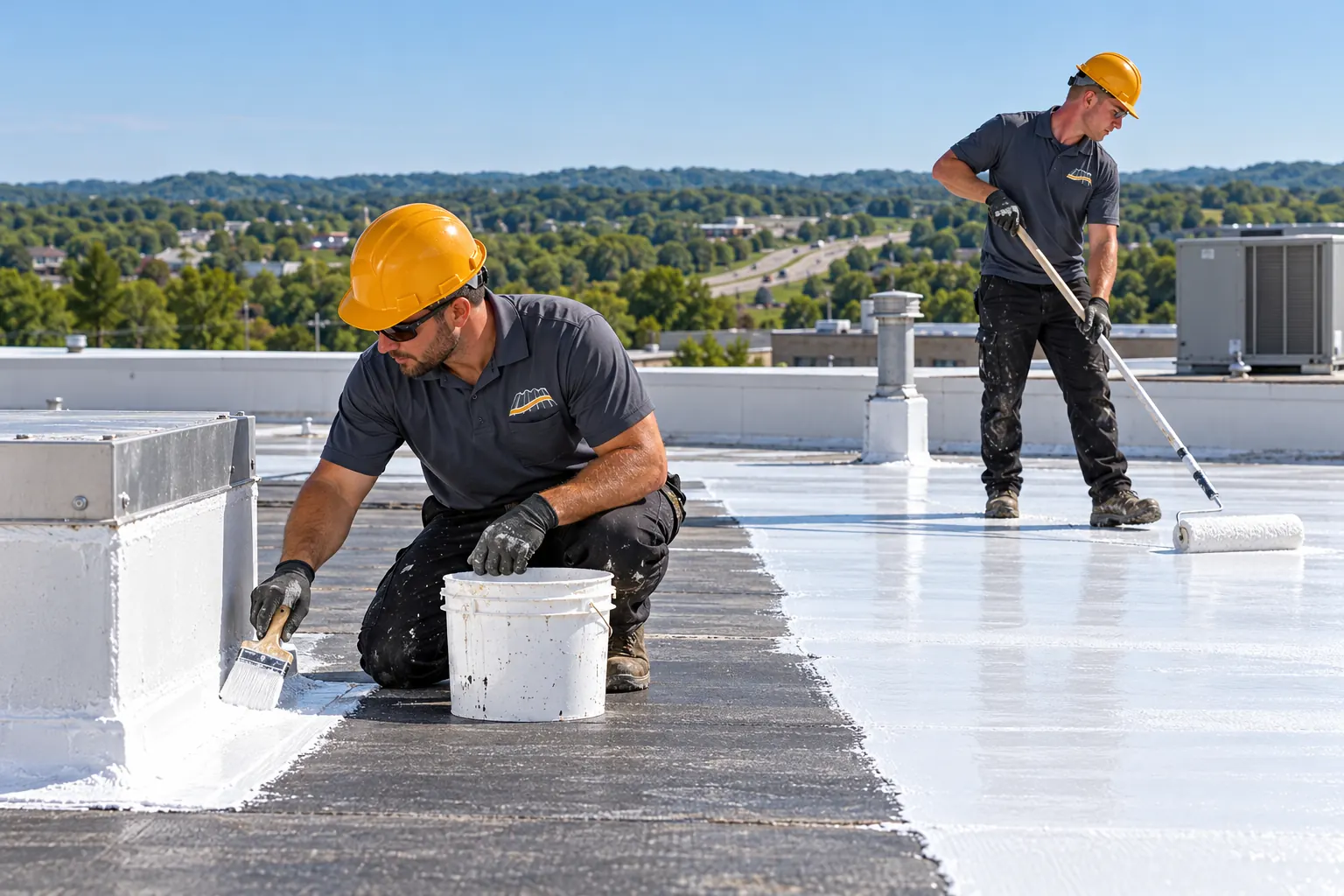
Pitched metal that sheds water within hours of a storm. A bright white acrylic finish goes on during dry, mild stretches, since rain or heavy dew can wash a fresh coat away.
Acrylic coating details
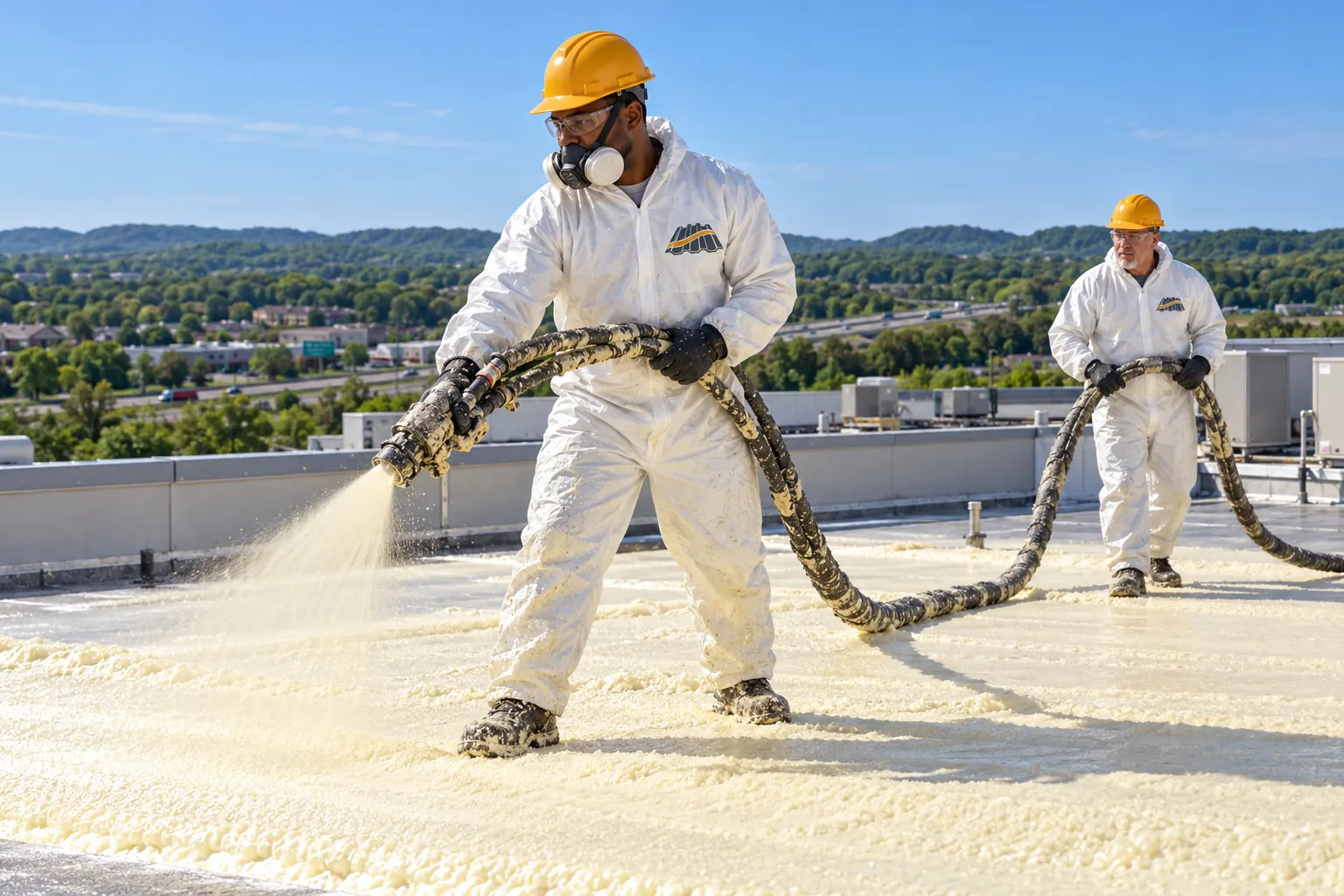
Uninsulated metal buildings whose steel drips on cold mornings. Closed-cell foam fills the panel ribs, buries screw and lap leaks, and gets a protective coating on top.
Spray foam roofing details
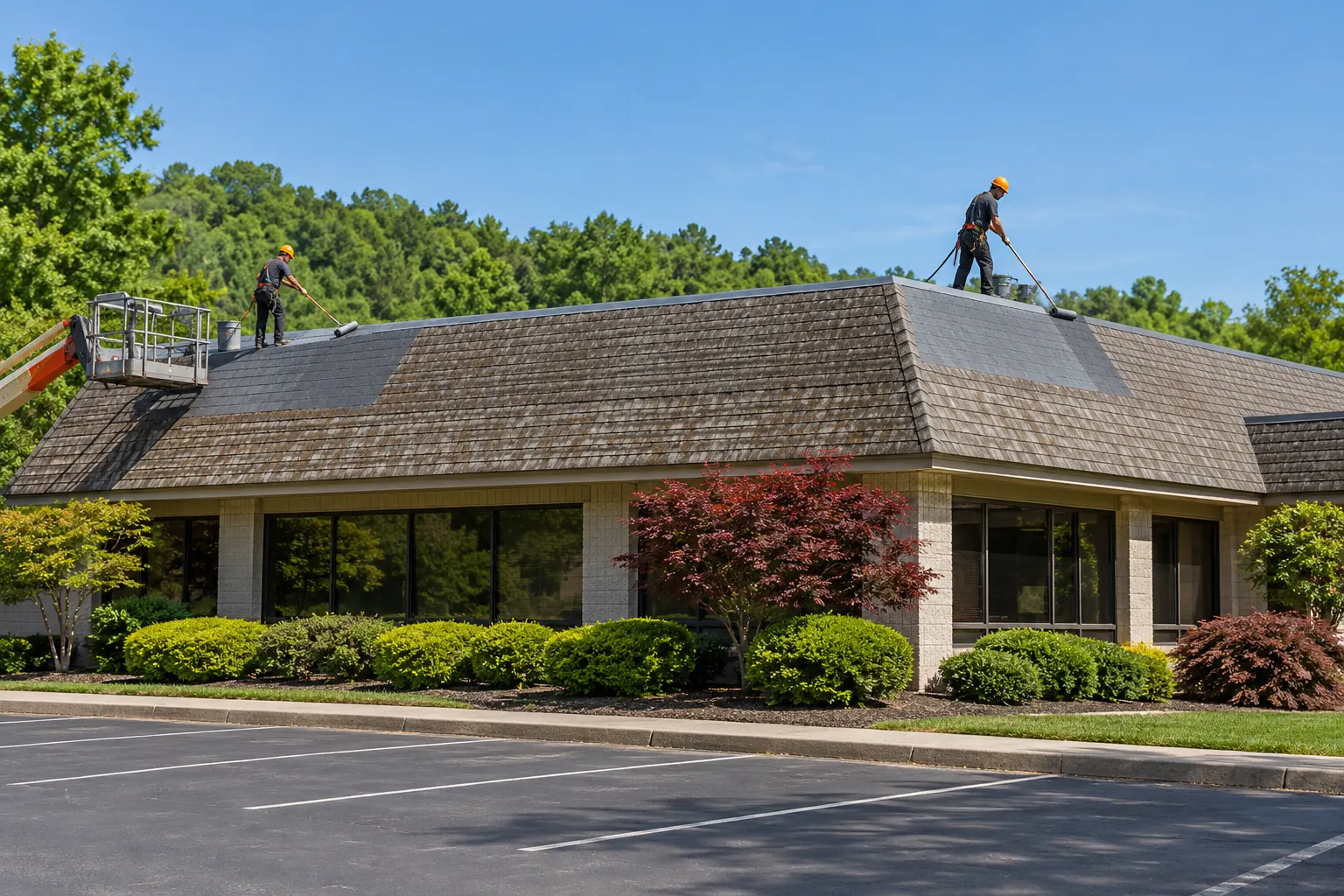
Commercial shingle roofs on strip centers, offices, and churches whose shingles still lie flat and hold their granules. The shingle maker and coating maker both have to approve it first.
Shingle coating detailsSigns To Check
Walk the building and the roof edge with this list. The chip beside each sign shows how soon it needs work.
Rubber washers under the screw heads shrink after years of sun, and water follows the shank into the building.
Orange streaks running downslope from a horizontal lap mean water sits in that joint and the steel underneath is starting to go.
Stitch screws pulled loose along the ridge let wind-driven rain under the cap. Check after every strong storm.
Clogged gutters back water under the eave trim and onto the top of the wall, where it rusts panel ends.
Water reaching stock, equipment, or ceiling tile is an open leak. Call before the next rain and mark where it lands.
Condensation dripping from bare panels looks like a leak. Foam on the roof keeps the steel warmer and cuts it down.
Coat Now Or Fix First
Most worn metal roofs land on one side of this line. The roof walk settles which side yours is on.

Ready To Coat
Chalky paint, light rust, and a handful of leaking screws describe a roof that takes a coating well.

Fix It First
Holes you can see daylight through, crushed sheets, or wet insulation need metal work before any coating.
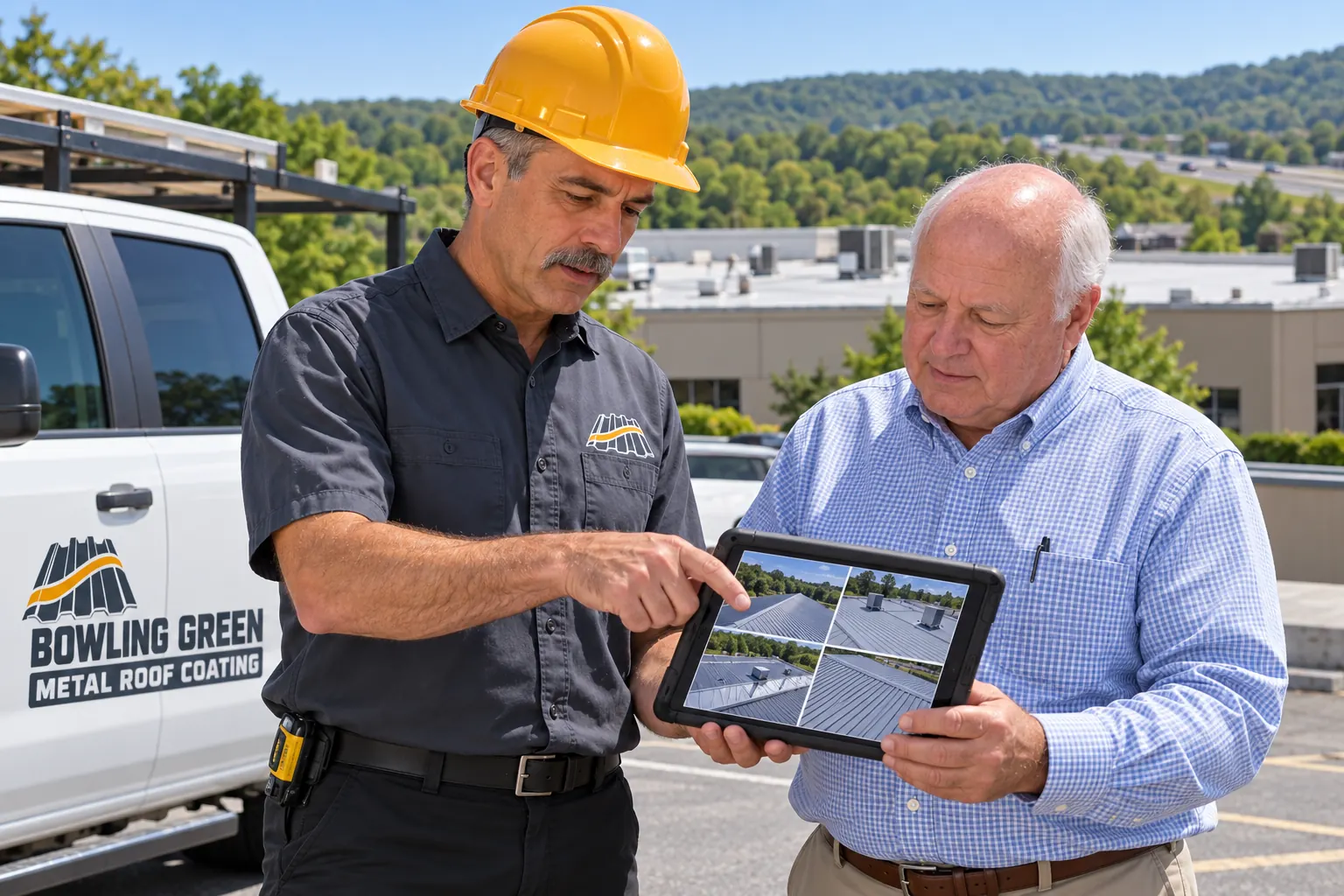
Call us and tell us where the water shows up inside and what sits under it. A marked floor plan or a dated photo helps us find the lap or screw above it faster.
How A Metal Roof Gets Coated
Each step depends on the one before it, so the order never changes. Weather and repair work set the pace more than roof size.


We walk every panel run, test screws, probe rust spots for soft steel, and take moisture readings so wet insulation is found before anything is coated.
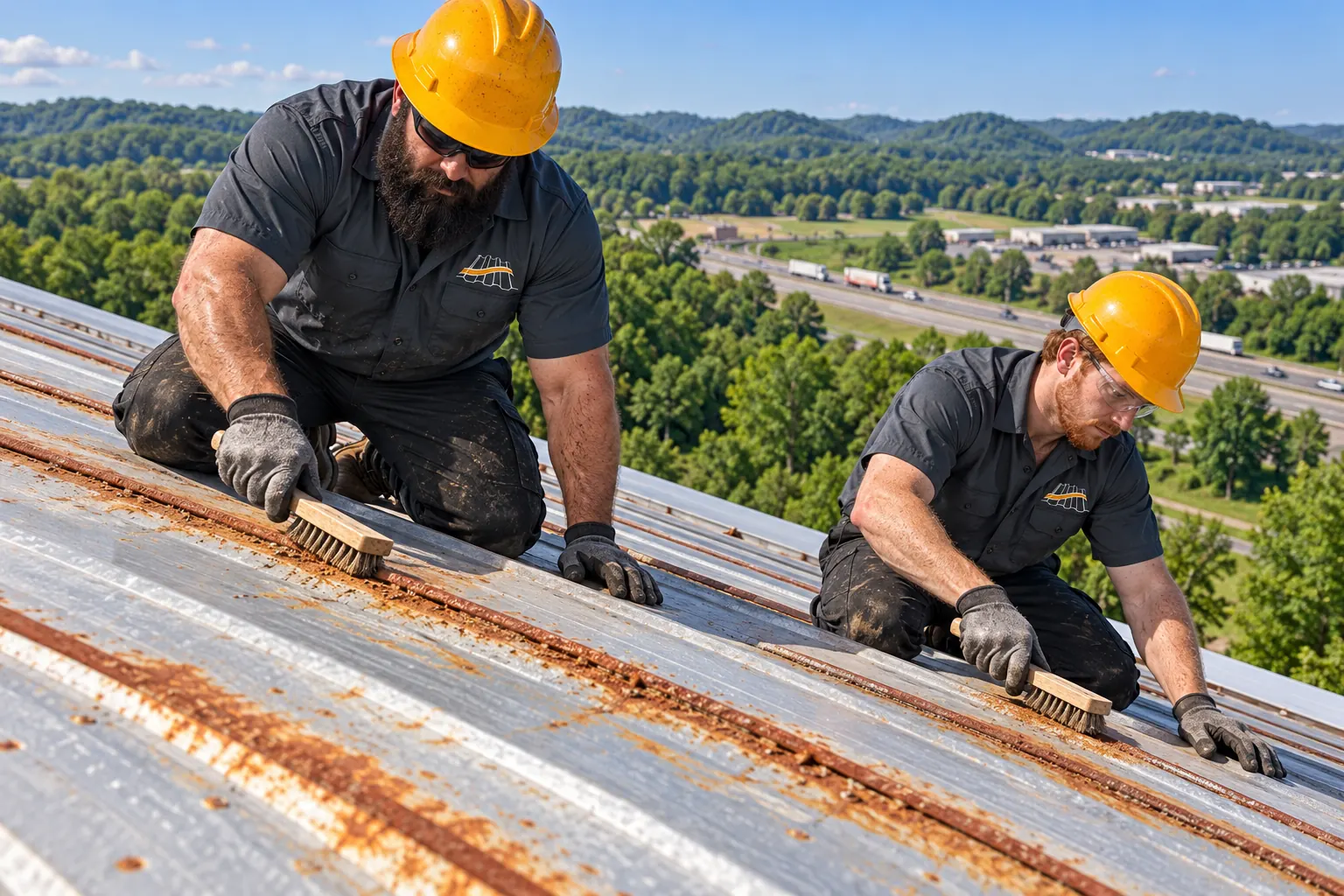
Pressure washing strips chalk and dirt. Rusted-through sheets are cut out or replaced, and loose or stripped screws are swapped for larger ones.
Brushed rust spots and galvanized panels get the primer the coating maker lists for that metal, so the base coat grips steel instead of scale.
Fabric goes into a base coat across end laps, side laps, ridge caps, curbs, and skylight edges, and sealant caps every fastener head.
Base and top coats go on to the thickness on the product sheet, with a wet-film gauge checking the film as the crew works.
Why Owners Coat Instead
A coating keeps the panels you already own on the building. Here is what changes once the joints are sealed.
Laps, ridge caps, and screw heads stop pulling water in, because the film bridges each joint after it has been cleaned and reinforced.
Light top coats reflect summer sun that faded steel soaks up, which matters most on buildings with thin insulation under the panels.
Crews stay on top of the panels, so shipping, production, and tenants keep using the building while sections are coated.
Old panels stay in place instead of going to a landfill, and the coating can be recoated later with a compatible product.
Where We Work
Warehouses, plant buildings, farm shops, church halls, and storefront rows are where we coat metal roofs most, in Bowling Green and the five towns below. Somewhere else? Call us or send us a message.
Shops and plants along the Simpson County side often carry service masts, exhaust fans, and conduit straps screwed through the panels.
Each of those penetrations gets its own flashing and sealant before the top coat.
Metal roof coating in FranklinRooftop HVAC units on Russellville metal buildings decide much of the scope.
Curb heights get measured first, because foam or new curbs bring the city HVAC plan step into the job.
Metal roof coating in RussellvilleFarm shops and equipment buildings around Scottsville have long eave runs that push heavy rain past small gutters.
Screws and end laps get sealed first, then larger gutters handle the overflow.
Metal roof coating in ScottsvilleOlder metal buildings around Morgantown show their age at the eave and the ridge.
Rust bloom on the end laps and backed-out ridge screws are graded panel by panel before primer.
Metal roof coating in MorgantownAuburn properties often join a metal shop to a storefront with a flat parapet roof.
Each roof section gets its own scope, so metal panels and the flat section are checked separately.
Metal roof coating in AuburnOwner Questions
Short answers to what owners ask on the first roof walk. The full list lives on the FAQ page.
Coating Basics
It lays one continuous rubbery film over the panels that closes screw heads, laps, and seams and keeps water and sun off bare steel.
Most older metal buildings leak at small openings, such as a cracked washer or a shrunken lap tape. Those get cleaned and reinforced first, and a light top coat also reflects summer sun.
Local Weather
They work on the same weak points every winter: laps, fasteners, and gutters. NWS normals put the city near 50 inches of precipitation a year, with a January mean close to 37°F.
Water pulled into an end lap freezes overnight and pries the joint wider. Sealing laps and clearing gutters before late fall stops that cycle early.
Daily Operations
Yes. The crew works on top of the panels, so the floor below keeps running. Pressure washing and spraying cause most of the disruption, and they are planned around your shifts.
Expect rooftop air intakes near the work to be covered or shut off, parking along the walls roped off for drift, and one building contact named for access.
Tax Questions
It can. IRS Publication 946 lists roofs among qualifying improvements to nonresidential buildings, with a 2026 deduction limit of $2,560,000.
Whether a given job counts as an improvement or a repair is a question for your CPA. Ask for invoices that split panel replacement, fastener work, and coating.
Plant Roofs
Long panel runs grow and shrink every day, and ridge caps and end laps take that movement. Stitch screws loosen, lap tape shrinks, and gaps open a little more each season.
On wide roofs like those near the Kentucky Transpark, those joints run hundreds of feet. Fabric and a flexible base coat let them move without opening again.

Tell us the roof size, its type, and how it looks today. We follow up to set a time to walk the roof in Bowling Green or a nearby town.
Leave a name and number and we will call you back about your commercial roof. Or call now: (270) 236-5206.